
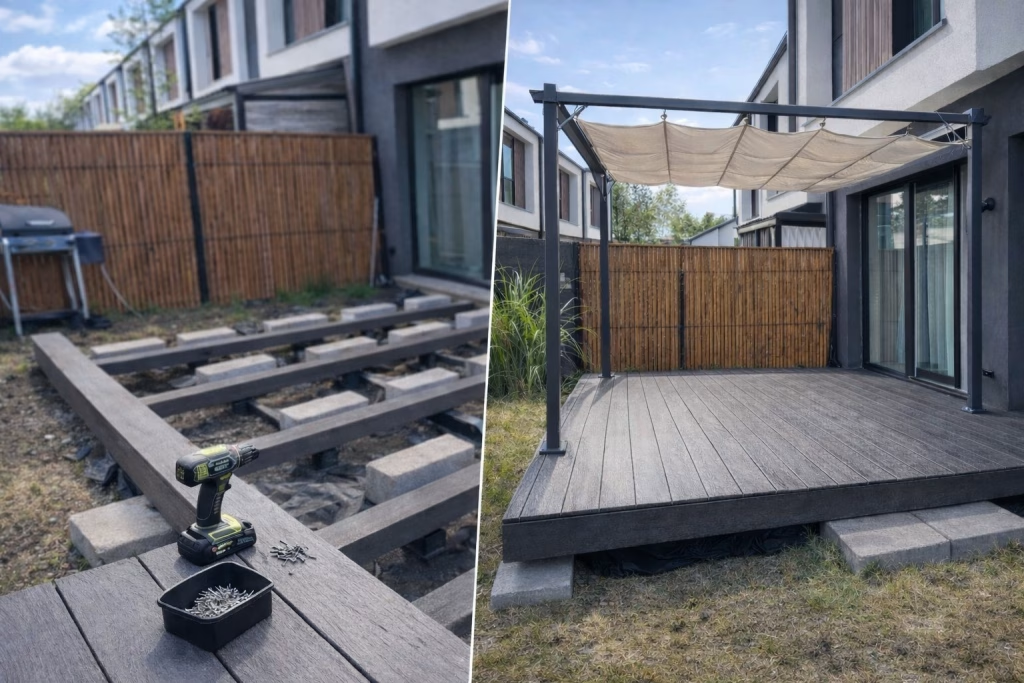
How long a terrace lasts depends on decisions made at the design and construction stage. A terrace should work for years without repairs or extra costs. In practice, many projects start to lose quality after just one or two seasons. Usually this is not the result of a single mistake, but of decisions taken at the beginning. It is the design, the material and the installation method that determine durability. Below we show what really matters in practice.
Table of contents:
1. Design – the starting point
2. Material – a real difference
3. Substructure – stability for years
4. Installation – the key details
1. Design – the starting point
The durability of a terrace starts at the design stage. This is when the conditions of use, exposure to moisture and sun, water drainage and expected loads are defined. Depending on whether the terrace is private or commercial, the requirements for the structure and materials will differ. Mistakes made at this stage are the hardest to fix, because they affect the entire project. A well-thought-out design avoids the problems that usually only appear after a period of use.
2. Material – a real difference
The choice of material is crucial for the durability of a terrace and has a direct impact on how it behaves in everyday use. Traditional wood, despite its popularity, needs regular maintenance and is vulnerable to moisture and changing temperatures. As a result, it can crack, warp and lose its looks.
The alternative is Ecoplank recycled plastic boards, which eliminate these problems. They do not absorb moisture, do not delaminate and remain dimensionally stable whatever the conditions. As a result, they need no impregnation or extra care, which in practice means less work, fewer complaints and lower costs in the long run.
You can find more on how recycled plastic boards differ from traditional materials in the guide “Why recycled plastic boards are a better solution for balconies and terraces”.
3. Substructure – stability for years
Even the best material will not ensure durability if the substructure is not built correctly. It is responsible for the stability of the whole terrace and its resistance to loads and outdoor conditions. What matters most is the right spacing of the joists, a solid, stable base and proper water drainage.
For heavier loads, it is also necessary to use additional reinforcement. Oversights at this stage often lead to deformation, unevenness and problems in use within the first seasons, which translates directly into costs and time for the contractor.
4. Installation – the key details
The final quality of a terrace depends on the installation method. This is the stage where mistakes that affect the durability of the whole structure most often happen. It is important to leave proper expansion gaps that allow the material to move with temperature. Equally important are properly prepared screw holes and correct fixing of the boards. That way, the durability of the terrace is not a matter of chance, but the result of well-made decisions.
Even small inaccuracies can lead to more serious problems over time, which is why precise workmanship is crucial here – especially in projects carried out for end customers.
A well-designed and well-built terrace eliminates problems during use. If you are working on a project, contact us – we will help you choose the material and avoid problems right from the planning stage.