
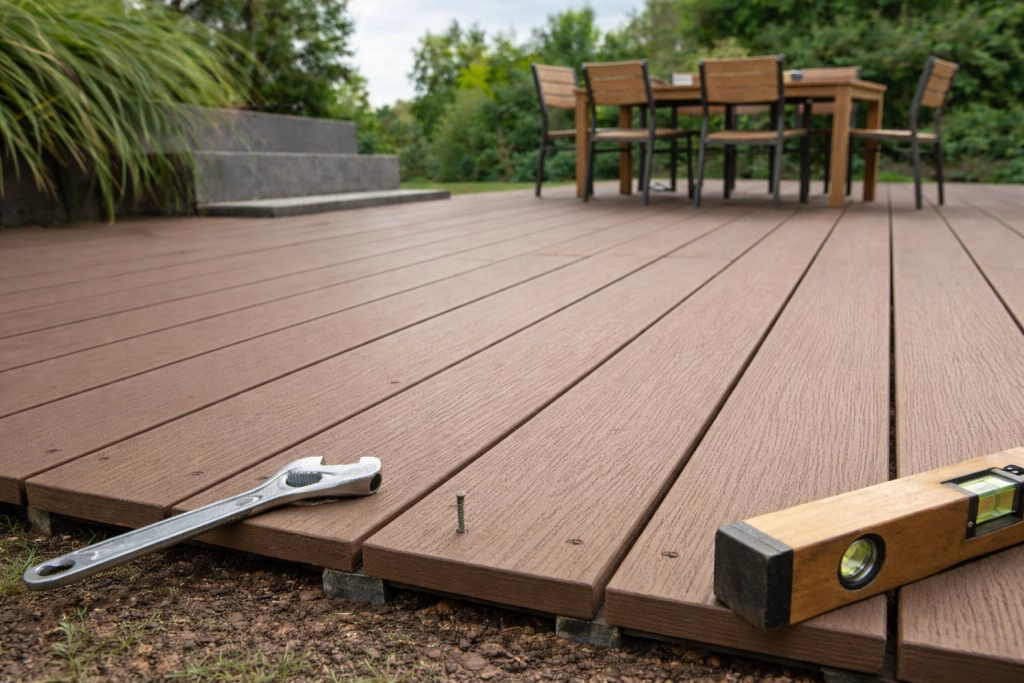
A terrace is an investment that is meant to work for years. In practice, many projects start causing problems after just one or two seasons. Boards deform, the surface stops looking good and using it is no longer comfortable. Usually this is not the result of a single mistake, but of decisions taken at the very beginning. That is why it is worth knowing what to look for before you choose the material and start building.
Table of contents:
1. Choosing the material – the foundation of the whole project
2. Resistance to outdoor conditions
3. Substructure and preparing the base
4. Installation – the stage that decides durability
1. Choosing the material – the foundation of the whole project
Choosing the boards is not just a question of looks. It is a decision that affects how the terrace will behave over the years. The choice is often based on price or a first impression. At first everything looks fine, but over time it turns out that the material cannot cope with real conditions. That is why it is worth taking a broader view – not only at appearance, but at how the material moves, how it reacts to moisture and whether it stays stable over time.
2. Resistance to outdoor conditions
All year round a terrace is exposed to changing conditions. Boards heat up in the sun, absorb moisture and move with temperature changes. If the material is not suited to this, problems appear fairly quickly. Its shape changes, the surface loses quality and using it becomes less comfortable. That is why it is so important to choose a solution that is stable and resistant to outdoor conditions – not just at the beginning, but in the long term.
3. Substructure and preparing the base
This is the stage that cannot be seen once the work is finished, but it matters enormously for the whole project. Even the best boards will not do their job if the substructure is not properly prepared. An uneven base, spacing that is too wide or a lack of proper support make the whole structure move. As a result, the terrace loses stability and problems appear sooner than they should.
4. Installation – the stage that decides durability
Installation is the moment when everything comes together. And this is exactly where mistakes very often happen. Laying the boards too tightly, leaving no room for the material to move or using the wrong fixings make the terrace behave differently than it should. Importantly, at first everything may look fine. The problems only show up over time. That is why installation should take into account how the material will behave in real conditions.
5. Use and maintenance
Many people only find out after the project is finished how much work it takes to keep a terrace in good condition. Regular maintenance, protecting the surface and repairs are what actually affect the cost and convenience of use in practice. That is why solutions that need no extra care and keep their properties for years are chosen more and more often.
Problems with a terrace do not happen by chance. They are usually the result of decisions taken at the beginning: the choice of material, the installation method and the preparation of the substructure. That is why it is worth approaching the project as a whole and thinking about it in the long term. A well-designed and well-built terrace is one you do not have to go back to after one season.
Do you have a terrace project?
We will help you choose a solution that works for your project – from the material to the installation.
Frequently asked questions
Why does a terrace start causing problems after just one season?
Because the cause lies at the start of the process: in the choice of material, the preparation of the substructure and the installation method. Deformation and loss of appearance are a consequence, not a coincidence.
What should I look at when choosing boards, apart from their appearance?
How the material reacts to moisture, how it behaves with temperature changes and how much care it needs. Price and a first impression say nothing about how the terrace will look after five seasons.
Do I need to leave gaps between the boards?
Yes. The material moves with temperature changes, so expansion gaps are essential. Laying the boards too tightly is one of the most common installation mistakes – the effects only show over time.
How important is the sub-base?
Crucial, even though it is invisible once the work is finished. An uneven base, joists spaced too far apart or a lack of support make the whole structure move and the terrace lose stability.
How much work does terrace maintenance take?
It depends on the material. Wood means oiling, impregnating and sanding every season. Recycled plastic boards need washing with water and a mild detergent twice a year, and nothing more.
Where should I start when planning a terrace?
With the conditions it will work in: moisture, loads, sun exposure and how often it will be washed. Only then can you choose the profile, joist spacing and fixing method.