
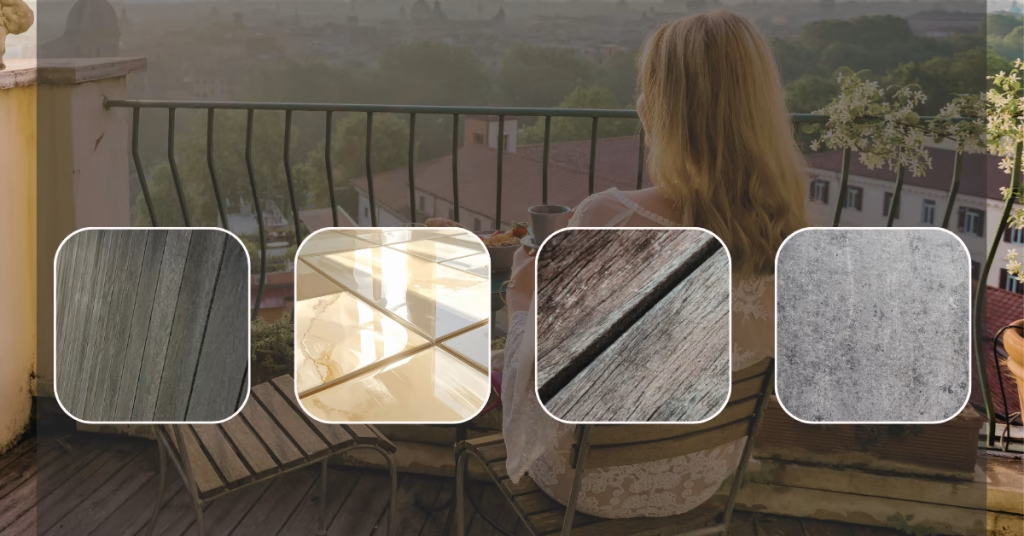
On a balcony or terrace, the quality of the materials used is best seen after a full season. Resistance to the weather – sun, moisture, wind and frost – matters enormously here. Then comes the test of everyday use: wet shoes, sand, chairs being moved, planters or a barbecue. Under these conditions a finishing material either keeps its appearance and durability for years or quickly starts demanding attention, repairs and further costs. Recycled plastic boards win not just because they are “eco”, but because they cope better with outdoor conditions and are easier to keep clean.
Table of contents
- What damages outdoor surfaces
- The advantage of recycled plastic boards
- Comparison with wood, tiles and concrete
- FAQ
- Installation mistakes
- Costs and maintenance
- Summary
What damages materials outdoors
Outdoors, resistance to three things counts: moisture, UV and temperature changes. If the material or the installation system has a weak point, water will find it. Then the domino effect begins: dirt gets into micro-cracks, the risk of slipping grows, and cracks, delamination or worn protective coatings appear.
The advantage of recycled plastic boards
The case for choosing boards made of recycled plastic is simple: instead of fighting water and weather every season, you choose a material that is made for it. Ecoplank products are made from recycled plastic (HDPE/PE/PP/PA/PVC), which is extruded and moulded into usable shapes.
The most noticeable benefits for a balcony and terrace:
- less maintenance – no regular oiling or recoating; regular washing is enough,
- more stable use in wet conditions – grooved boards are designed for better grip,
- the environmental argument – the material is made from post-industrial recycled plastic.
Comparison with wood, tiles and concrete
Every material has its advantages and uses. The difference lies in what it costs you over time.
Wood
It looks great but needs regular protection. Guides for timber decks treat cleaning and re-protecting the surface every 1–3 years (often with sanding) as standard. That means time, money and “breaks” in use.
Tiles
On a balcony they are sensitive to the whole layer system: waterproofing, joints and movement of the base. Freeze–thaw cycles increase the risk, because moisture getting into the grout and micro-cracks can lead to cracking and debonding.
Concrete
It looks modern, but it is porous and prone to micro-cracks when water penetrates it and works during frost. On top of that come the chemistry and physics of de-icing: industry publications describe how salt and thaw cycles can accelerate the degradation of concrete in such conditions.
Frequently asked questions
Are recycled plastic boards suitable for an apartment-block balcony?
Yes, as long as the installation allows for water drainage, stable support and expansion gaps. A balcony is a place where workmanship errors come to light faster.
Does recycled material mean a worse appearance?
No. Ecoplank materials go through a controlled extrusion and moulding process, and the product data sheets give specific parameters and explain that slight differences in shade are a natural feature of recycled material.
What does cleaning involve?
Usually just regular washing and removing dirt – not renewing protective coatings as with wood.
Installation mistakes
Even the best material will give a poor result if the terrace or balcony is not built properly. The most common slip-ups are:
- no slope or drainage,
- wrongly chosen support or spacing,
- leaving out expansion gaps and installation clearances,
- not following the manufacturer’s instructions.
Costs and maintenance
The difference between recycled plastic boards and traditional solutions often only shows over time. With wood you pay a “subscription” in the form of maintenance (cleaning, sanding, protection). Tiles and concrete, in turn, reveal their flaws and need repairs when a layer of the system fails (grout, waterproofing, cracks).
Boards for a balcony or terrace: summary
Recycled plastic boards are a good choice for a balcony or terrace when peace of mind in use matters: less maintenance, less susceptibility to moisture and frost problems, and a sound environmental argument based on real recycling.
If the goal is to choose a solution for a specific balcony or terrace (sun exposure, loads, water drainage), it is best to base the decision on site conditions and choose items from the Ecoplank range that suit the project.